If you are in your mid to late 40s, you might have started noticing subtle shifts in your body.
Day in and day out, the single most common thing we hear from women in our office is: "I just don't feel like myself."
You may not have the classic hot flashes or night sweats, but something is off. Maybe your favorite workout isn't yielding the same results, your skin feels different, or you’re experiencing sudden anxiety, brain fog, and erratic sleep. Perhaps your periods are shifting, or you’ve noticed unexpected urinary urgency or discomfort during intimacy. You know your body, you know you aren't feeling optimal, and you don't know how to get back to your normal.
When women bring these concerns to traditional medical settings, they are too often met with responses like: "Your blood work is normal," "You’re too young for menopause," or "That’s just a normal part of getting older."
Here is the truth: You don't have to just "suck it up" and live with it.
One of the biggest obstacles women face during perimenopause is relying solely on laboratory tests.
As expert urologist and sexual medicine specialist Dr. Rachel Rubin often points out, perimenopause isn't a slow, steady decline in hormones—it’s like driving down the highway while your hormone "gas tank" unpredictably overflows one minute and drops to empty the next.
Because hormone levels fluctuate wildly from day to day (and even hour to hour), bloodwork is not always accurate in diagnosing perimenopause. A single lab draw can easily show "normal" levels while you are actively suffering from significant hormonal shifts.
That is why, in our practice, we do things differently: We listen to our patients and treat their presenting symptoms, not just a lab sheet.
Because estrogen and progesterone receptors exist all over your body—in your brain, heart, bones, skin, and pelvic floor—these erratic hormonal shifts show up in real, physical ways long before your periods ever stop:
Most medical providers receive very little formal training in menopause management. This leaves a gap where women's symptoms are either dismissed or treated with piecemeal solutions—an anti-anxiety med here, a sleeping pill there, or endless rounds of antibiotics for recurrent UTIs.
As board-certified urologist and host of You Are Not Broken, Dr. Kelly Casperson, frequently advocates: women deserve proactive, evidence-based care rather than waiting until symptoms become debilitating.
Here is why seeking a dedicated menopause practitioner changes the game:
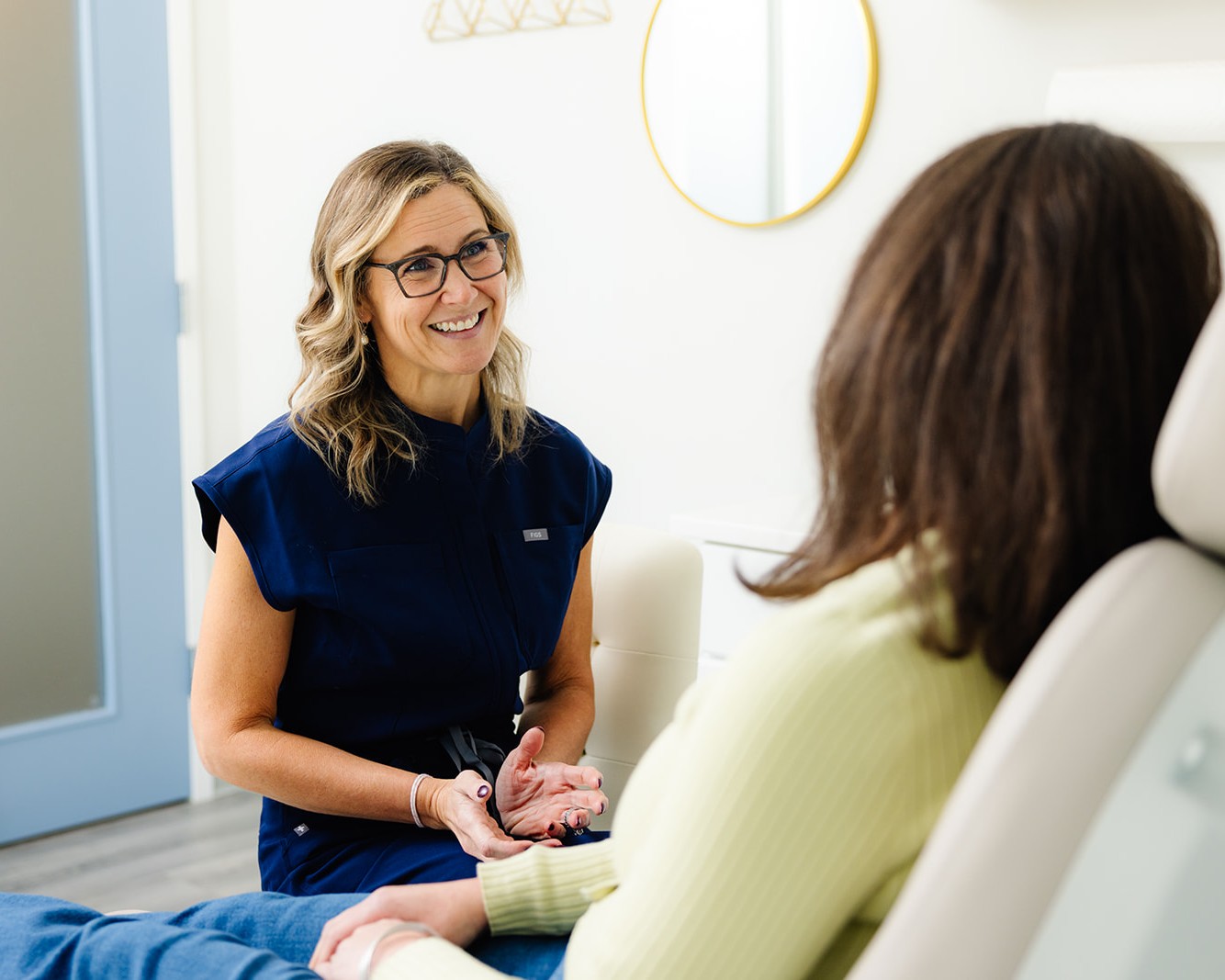
A specialized practitioner looks at the full picture. Instead of treating isolated symptoms, we evaluate how your hormonal shifts are driving changes in your energy, metabolism, skin health, and mood. Our first visit is a full hour going into all aspects of your life.
The Menopause Society emphasizes that hormone therapy (HT) and non-hormonal treatment options are most effective and carry the best safety profile when started early in the transition—particularly within 10 years of menopause onset. Waiting years while symptoms worsen means missing out on crucial windows for preventive health.
Estrogen protects your bones, brain, cardiovascular system, and tissue integrity. Early intervention helps preserve bone density, supports cognitive function, and prevents progressive conditions like GSM (which only worsens without localized treatment).
When you work with a comprehensive practice that blends wellness, aesthetics, and hormone health, perimenopause care isn't just about survival—it's about optimization.
Perimenopause isn't a disease to suffer through—it is a natural phase of life that simply requires the right support, tools, and expertise.
If you feel like something is "off," trust your intuition over a basic blood test. You don't have to wait for your symptoms to hit a crisis point before reaching out for help.
We hear you, we believe you, and we will work to make you feel better.
Ready to take back control of your health? Schedule a consultation with our specialized menopause practitioners today. Let's create a personalized roadmap so you can get back to feeling like yourself again.
.jpg)